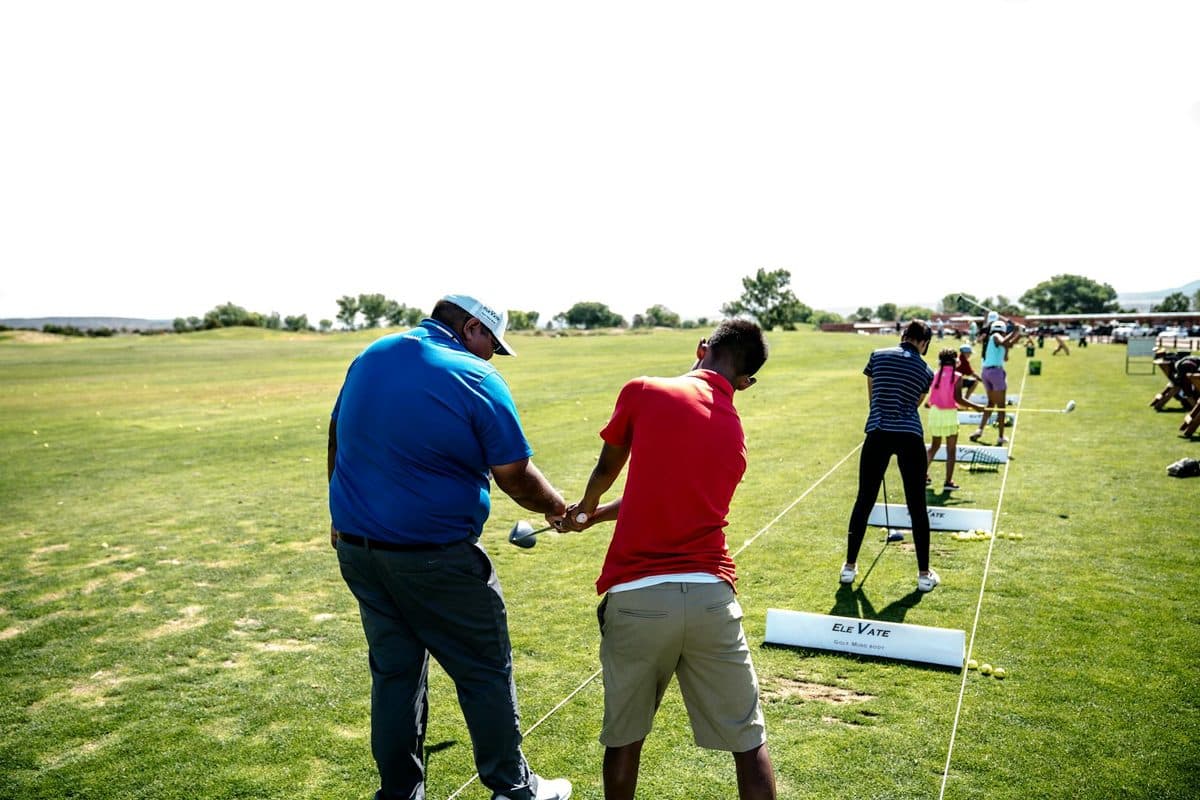
A PGA professional is a qualified golf coach who has completed a structured three-year training programme with the Professional Golfers' Association of Great Britain and Ireland. They are licensed to teach golf, work at clubs and ranges, and accompany players on the course. When you book a lesson with a PGA professional, you are working with someone who has been trained and assessed to a recognised national standard.
What does PGA stand for?
PGA stands for the Professional Golfers' Association of Great Britain and Ireland. Founded in 1901, the PGA is the governing body for golf professionals in the UK and Ireland. It sets the training standards, oversees qualifications, and supports professionals throughout their careers.
The PGA is separate from the DP World Tour (formerly the European Tour) and the R&A. It specifically focuses on the professional development of golf coaches and club professionals rather than tournament golf.
How does someone become a PGA professional?
Becoming a PGA professional takes a minimum of three years. The training combines practical on-course work with academic study, and candidates must complete both to qualify.
The programme covers:
- Golf coaching — technique, teaching methodology, and how to adapt instruction for different players
- Golf science — biomechanics, sports psychology, and equipment knowledge
- Business and management — running a pro shop, retail, and club operations
- Rules and regulations — a thorough understanding of the Rules of Golf
Candidates are assessed throughout the programme through written exams, practical assessments, and coaching observations. There is no shortcut. A PGA professional has earned their qualification through sustained effort and demonstrated competence.
What is a PGA professional qualified to do?
A PGA professional is qualified to teach golfers of all levels, from absolute beginners to scratch players. Their training covers how to analyse a golf swing, identify the root cause of problems, and deliver clear, practical instruction that leads to real improvement.
Beyond coaching, many PGA professionals also work in club management, custom fitting, and course operations. Some specialise entirely in teaching. Others combine coaching with running a pro shop or managing a golf facility.
The key point is this: their qualification is specifically designed around making them effective coaches. That is what sets a PGA professional apart from someone who plays golf well but has no formal teaching background.
Is a PGA professional different from a golf coach?
Not always, but the distinction matters. Anyone can call themselves a golf coach without holding any formal qualification. A PGA professional, by contrast, has passed a nationally recognised programme and is accountable to the PGA's standards of conduct and continuous professional development.
When you book a lesson with a PGA professional, you have a clear benchmark for who you are working with. That is not guaranteed when booking with a self-described coach whose background is unclear.
What happens in a lesson with a PGA professional?
A PGA professional will begin by watching you hit a few balls, or in the case of a complete beginner, asking you to make some practice swings. This assessment is not a test: it is how they build a picture of where you are and what to focus on.
From there, the lesson is structured around your specific needs. A good professional will not attempt to overhaul everything at once. They will identify the one or two changes that will have the most impact and work on those in depth.
Common areas covered in lessons include grip, posture, alignment, swing path, and impact position. Most professionals use video analysis to show you what is actually happening in your swing, which is often quite different from how it feels.
At the end of the lesson, you will leave with specific practice points: clear, actionable drills you can work on between sessions.
What is the difference between a PGA professional and a PGA Tour professional?
This is a common source of confusion. A PGA professional (lowercase "professional") refers to a qualified teaching pro who has completed the PGA's training programme. They may or may not compete in tournaments.
A PGA Tour professional refers to a touring golfer who competes on the American PGA Tour. These are elite competitive players, many of whom have no formal coaching qualification at all.
In the UK, you will sometimes hear "tour pro" used to describe players on the DP World Tour. These are competitive golfers, not necessarily qualified coaches.
The PGA professional teaching at your local course or range is a trained, qualified instructor. That is the person you want coaching you.
Do all golf clubs have a PGA professional?
Most established golf clubs and driving ranges in the UK employ at least one PGA professional. Many have a head professional supported by one or more assistant professionals, who may still be working through their training programme.
If you are unsure whether a coach at a club holds full PGA qualification, it is entirely reasonable to ask. A genuine PGA professional will be happy to confirm their status, and their details are often listed on the PGA's online register.
How do I find a PGA professional to teach me?
You can search the PGA's official directory at pga.info, which lists qualified professionals by location. Alternatively, book a golf lesson through Golf Experience Day and your session will be with a PGA-qualified professional at a venue near you.
Golf Experience Day connects you with PGA professionals across the UK. Whether you are picking up a club for the first time or looking to break a scoring barrier, the right professional will meet you at your level and give you something concrete to work with.
What level of golfer benefits from PGA lessons?
Every level benefits, but the impact is often greatest at the two ends of the spectrum: complete beginners and committed improvers.
For beginners, working with a PGA professional from the start means you build correct habits early. Bad habits picked up without guidance are significantly harder to fix later. A single lesson in the early stages can save months of frustration.
For golfers who have been playing for years and feel stuck, a PGA professional brings an objective eye to problems you have probably stopped noticing. Most golfers who have plateaued are unaware of the root cause. A qualified professional will find it quickly.
Mid-handicap golfers working to improve their scores benefit from focused work on the specific parts of their game that are costing them strokes, whether that is ball striking, short game, or course management.
How often should I take lessons?
There is no universal answer, but most PGA professionals recommend spacing lessons to allow time for practice in between. A lesson gives you the instruction. Practice is where the change actually happens.
A common approach for someone starting out is one lesson every two to three weeks. This gives enough time to work on the drill from your previous session before adding new information. For golfers working on a specific problem, a short block of lessons closer together can accelerate progress.
The professionals you will meet through Golf Experience Day's golf lessons will give you honest guidance on what suits your situation. There is no pressure to book more than you need.
Our Verdict
A PGA professional is a trained, qualified golf coach who has completed a rigorous three-year programme with the Professional Golfers' Association of Great Britain and Ireland. They are not simply good golfers who teach on the side: they are professionals who have been trained specifically to help others improve.
Booking a lesson with a PGA professional is the most reliable way to get instruction that is grounded in proper technique, tailored to your level, and backed by a recognised qualification. Whether you are picking up a club for the first time or trying to find the flaw that is holding your game back, a PGA professional will give you a clear path forward.
Book your golf lesson with a PGA professional today and see the difference qualified coaching makes.